
Themes, Variants, Formats
A three-layer brand system. Structure, skin, and generation recipes are managed centrally and flow to every user instantly — consistency by default rather than by discipline.
Case study 01 · for Planfocus Consulting
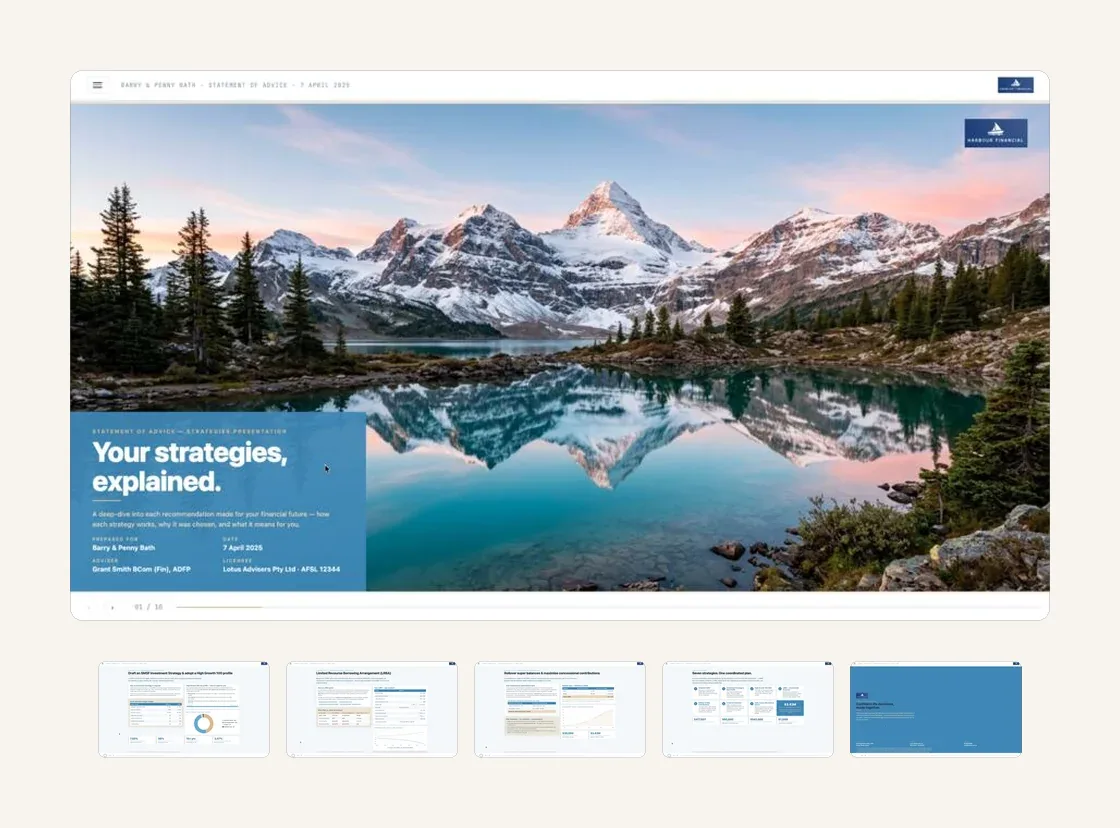
Turns a dense 40-page compliance document into a client-ready interactive presentation in minutes — without the client’s personal data ever reaching the AI.
The problem
Financial advisers must produce a Statement of Advice — a long, legally compliant Word document setting out their recommendations. It is correct, it is required, and it is close to unreadable. It then gets presented in what should be the most valuable hour of the client relationship.
The alternatives were building a presentation by hand every time — hours per client, inconsistent and off-brand — or paying a paraplanner or designer to do it. Neither scales across a practice, let alone a licensee with hundreds of advisers.
What we built
The adviser uploads the .docx they have already written. No new inputs, no re-typing, no separate content step.
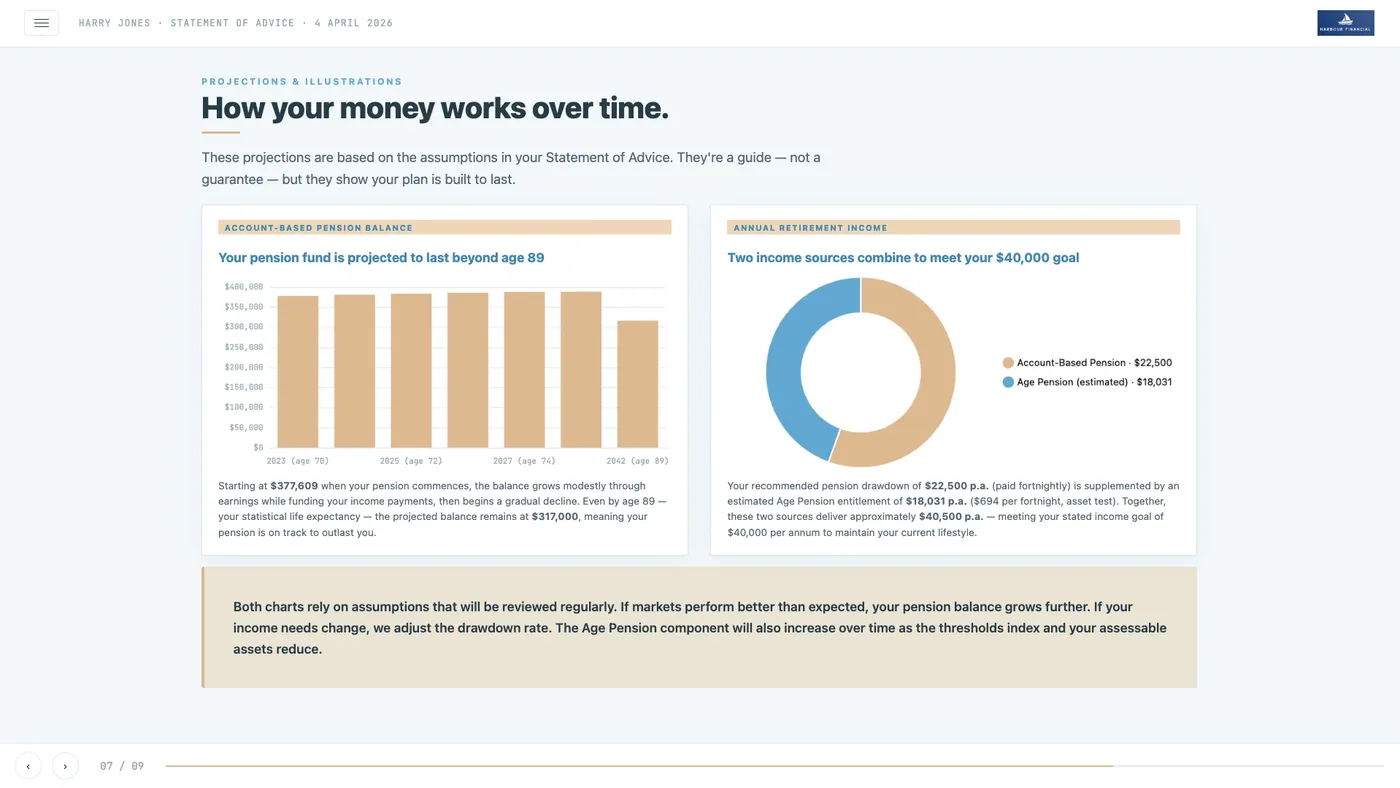
The document is read, structured into sections, and laid out in the organisation’s house style. Charts are generated from the actual figures in the advice. The structure adapts to what the document contains rather than forcing everything into one template.
A full inline editor — text, tables, images, section order, undo and redo. Then presenter mode with per-slide notes, or a clean PDF export to send afterwards.
The hard part
Before a single word is sent, a dedicated redaction engine strips names, dates of birth, addresses, phone numbers, emails and account numbers, replacing them with neutral placeholders — including a purpose-built Australian address recogniser layered on top of the general model. The AI only ever sees a de-identified document.
The real values are stitched back in inside the application, afterwards. And before sending, the de-identified text is re-scanned: if any identifier slipped through, the system stops and refuses to send rather than risk a leak. Fail-safe, not fail-open.
That pattern — de-identify, process, reinstate, verify — is how we approach any AI system handling data that can’t leave the building.
Also built
A three-layer brand system. Structure, skin, and generation recipes are managed centrally and flow to every user instantly — consistency by default rather than by discipline.
Per-slide notes: an opening line, the number to land on, an anticipated question with a prepared answer, and a transition. Visible only to the adviser.
Draft, in review, presented, archived. Reviewers leave comments and visual mark-up before anything reaches a client.
Tenant isolation, two-factor authentication on by default, single-session enforcement, encryption at rest with managed keys.
An immutable events log of user actions that the organisation can rely on for governance.
Hosted in AWS Sydney, so client data stays in the jurisdiction the regulator expects.
Stack
Worth being precise about
It does not write the advice. The licensed adviser authors the document; AdviceStudio transforms a finished, compliant document into a presentation. That distinction matters enormously in the compliance conversation, and it is a strength rather than a hedge — the human professional remains the author of the advice.
It is also not a generic slide tool. It is purpose-built for a specific document type and a specific meeting.
That is the problem we are best at. Tell us about yours.